FREE sourcing support and up to 3% matching support for qualified business buyers. Eligibility applies to qualified business buyers and is confirmed after we review your product, quantity, destination, and sourcing requirements.

Procurement services

SwatchHarbor Procurement: build a comparable quote pack for home textiles

Sourcing Help is a buyer-side workflow: capture the same specification, request mill replies, and keep sample versions separate. This page does not introduce a new measured landing keyword.

  1. Brief
  2. Swatch
  3. Bulk
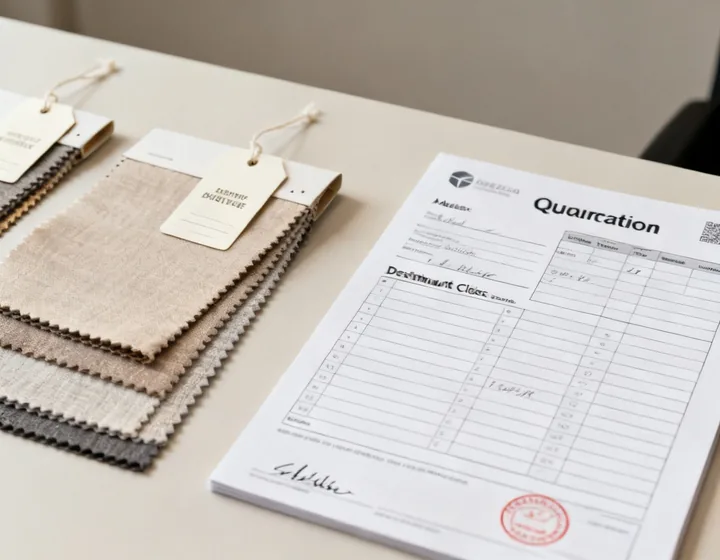
Sample tags and quotation worksheets on a sourcing desk

Supplier and sample handoffs

Each mill must quote against the same written pack. If one reply omits usable width, finishing scope or sampling charges, it cannot sit next to a complete offer. The questions below keep that pack honest for Home Textile and Upholstery Fabrics.

Define deliverables and the approval sequence

Ask which document the mill will issue for composition, construction, GSM and usable width. Name whether you need a stock swatch, a lab dip, a strike-off, a pre-production cutting or a bulk-lot retain. Those objects answer different questions. A swatch can screen hand and weave. A lab dip addresses color only for the stated substrate. A strike-off checks print placement. None of them automatically represent the production dye lot. Write the owner of each approval, the permitted deviation and the date the decision was recorded. If flame, abrasion or lightfastness matters, name the method, edition and specimen size in the RFQ instead of copying a catalog adjective. Costs for extra samples, courier and testing should appear as line items so they are not hidden inside a low unit price.

Record supplier exceptions and sample revisions

Mills often propose a nearby construction, a different backing or a substitute finish. That can be useful, but only if the exception is marked. Require a side-by-side note covering fiber blend, yarn count, weave, weight, usable width, stretch, coating, backing, finish, minimum order, sample timing and bulk lead time. Review whether those changes affect cutting yield, seam appearance, pilling, care or logistics. If a mill revises a lab dip, keep the previous version identity; do not overwrite the file name and lose the trail. Quotations that mix greige, dyed and finished stages in one number need to be split so inclusions and exclusions stay visible. Freight, duties and packing method belong in the same comparison, because a cheaper roll that ships on a shorter usable width can cost more in the cut plan.

Agree inspection responsibility and export handover

Decide who performs roll inspection, who holds AQL responsibility and which defects are measured on the face versus the reverse. If you request OEKO-TEX, GOTS, GRS or ISO records, ask the proposed mill for a current document, issuing body, scope, site and exact-article connection. This service does not hold those credentials. For covered US textile products, fiber-content and country information still need qualified review; a website checklist is not a labeling opinion. Export handover should name Incoterms, roll length, core, wrapping and destination warehouse constraints. After award, bind the retained sample identity to the production lot. If inspection is skipped, write that decision too, so later shade or abrasion disputes have a recorded baseline.

Send the quote pack we should match

Share the relevant sample identity, specification fields, quantity and US destination. We will coordinate comparable factory quotations without ranking mill replies by a single unit figure.